


The West African Science Service Centre on Climate Change and Adopted Land Use (WASCAL) has offered 100 scholarships to 10 West African graduate students to study courses in climate change.
The West African Science Service Centre on Climate Change and Adopted Land Use (WASCAL) has offered 100 scholarships to 10 West African graduate students to study courses in climate change.
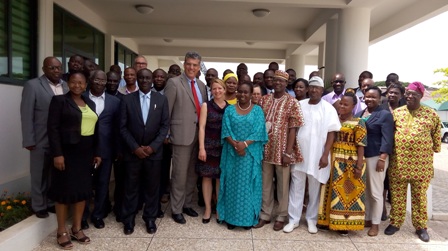
The programme, supported by the Federal Ministry of Education and Research of Germany, comprised 60 Doctoral Research Programme and 40 Master’s Research Programme is to strengthen West Africa’s human scientific capacities to analyse regional climate change impacts.
The postgraduate programme was a partnership between 10 West African Universities and selected German Institutions.
The students were selected from Ghana, Nigeria, Niger, Mali, Togo, Benin, The Gambia, Senegal, Burkina Faso and Cote d’Ivoire.
Dr Laurent Sedogo, Executive Director of WASCAL announced this when he opened the sub-regional consultative meeting on climate change in Accra.
The meeting brought together researchers, government institutions, policy makers and stakeholders in the climate change sector to draw a strategic plan for West African Climate Research Agenda 2020.
The meeting he said was the last of three consultative meetings to identify common research and capacity building needs of different member countries for consideration in a final regional meeting.
Dr Sedogo said the initiative was part of WASCAL’s commitment to train and build the capacity of the next generation of African scientists to champion the fight against climate change, while influencing governments and policy makers.
Since the inception of the programme in 2012, 255 students have benefited from the scholarship programme.
“WASCAL is committed to being a unique regional research centre that pursues a research for development agenda and provides relevant research findings that feed directly into national and regional policy formula”, he added.
He noted said WASCAL is poised to lead in the area of climate change and advocate science-based adaptation and mitigation strategies to enhance the resilience of human and environmental systems to the threat of climate change.
Dr Sedogo urged participants to discuss the issues passionately and focus on developing a demand-driven research and capacity building needs to benefit member countries.
Mr Bernhard Abels, Deputy Head of Mission at the German Embassy, said the threat of climate change and climate variability has resulted in floods, droughts, high temperatures, declined in water suppliers and reduced agricultural yields.
He said over the past five years, 30 million Euros was invested in infrastructure, scientific equipment, capacity building and research undertaken by German and African scientists.
He said the Republic of Germany believes that working with partners in West Africa could reduce the effects and threats of climate change through effective research and exploring science-based solutions.
Mr Abels noted that through the WASCAL initiative, the research infrastructure and capacity in West Africa related to climate change has been strengthened and preparing to lead in conducting cutting-edge research to produce sustainable solutions to the problems.
Professor Janet Olatundun Adelegan, Director of Capacity Building for WASCAL said her outfit conducts a regional research and capacity-developing programme to improve the use of land resources through better technologies, policies, institutions and management.
Prof Adelegan said WASCAL is organised around three principle components: climate service department, which collects, integrates and analyses data while the research department seeks ways to generate resilience in cultural landscapes and the graduate studies department strengthens human capacity through partnerships with universities in the region.
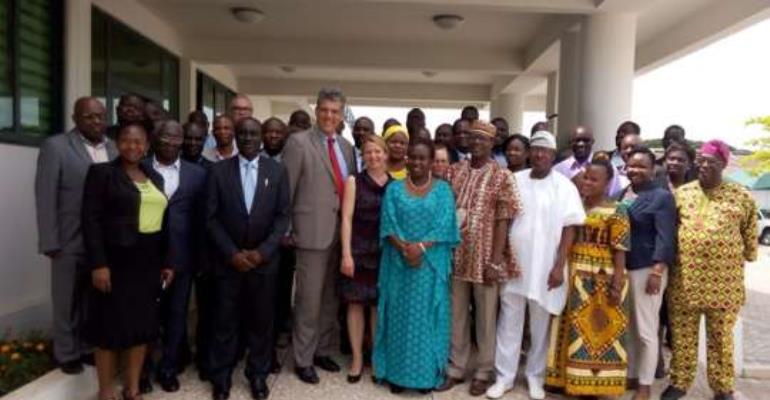
Accra, April 6, GNA – The West African Science Service Centre on Climate Change and Adopted Land Use (WASCAL) has offered 100 scholarships to 10 West African graduate students to study courses in climate change.
The graduate programme was aimed at designing strategies to adapt to threats, opportunities and uncertainties of climate change within the region.
The programme, supported by the Federal Ministry of Education and Research of Germany, comprised 60 Doctoral Research Programme and 40 Master’s Research Programme is to strengthen West Africa’s human scientific capacities to analyse regional climate change impacts.
The postgraduate programme was a partnership between 10 West African Universities and selected German Institutions.
The students were selected from Ghana, Nigeria, Niger, Mali, Togo, Benin, The Gambia, Senegal, Burkina Faso and Cote d’Ivoire.
Dr Laurent Sedogo, Executive Director of WASCAL announced this when he opened the sub-regional consultative meeting on climate change in Accra.
The meeting brought together researchers, government institutions, policy makers and stakeholders in the climate change sector to draw a strategic plan for West African Climate Research Agenda 2020.
The meeting he said was the last of three consultative meetings to identify common research and capacity building needs of different member countries for consideration in a final regional meeting.
Dr Sedogo said the initiative was part of WASCAL’s commitment to train and build the capacity of the next generation of African scientists to champion the fight against climate change, while influencing governments and policy makers.
Since the inception of the programme in 2012, 255 students have benefited from the scholarship programme.
‘WASCAL is committed to being a unique regional research centre that pursues a research for development agenda and provides relevant research findings that feed directly into national and regional policy formula’, he added.
He noted said WASCAL is poised to lead in the area of climate change and advocate science-based adaptation and mitigation strategies to enhance the resilience of human and environmental systems to the threat of climate change.
Dr Sedogo urged participants to discuss the issues passionately and focus on developing a demand-driven research and capacity building needs to benefit member countries.
Mr Bernhard Abels, Deputy Head of Mission at the German Embassy, said the threat of climate change and climate variability has resulted in floods, droughts, high temperatures, declined in water suppliers and reduced agricultural yields.
He said over the past five years, 30 million Euros was invested in infrastructure, scientific equipment, capacity building and research undertaken by German and African scientists.
He said the Republic of Germany believes that working with partners in West Africa could reduce the effects and threats of climate change through effective research and exploring science-based solutions.
Mr Abels noted that through the WASCAL initiative, the research infrastructure and capacity in West Africa related to climate change has been strengthened and preparing to lead in conducting cutting-edge research to produce sustainable solutions to the problems.
Professor Janet Olatundun Adelegan, Director of Capacity Building for WASCAL said her outfit conducts a regional research and capacity-developing programme to improve the use of land resources through better technologies, policies, institutions and management.
Prof Adelegan said WASCAL is organised around three principle components: climate service department, which collects, integrates and analyses data while the research department seeks ways to generate resilience in cultural landscapes and the graduate studies department strengthens human capacity through partnerships with universities in the region.
The third sub-regional consultative meeting to build a regional research agenda that reflects West African needs was held in Accra last week, at the West African Science Service Centre on Climate Change and Adapted Land Use (WASCAL) Headquarters. – See more at: http://thebftonline.com/business/economy/18264/regional-consultation-to-build-regional-research-in-climate-change.html#sthash.3yskf3o5.dpuf
The West Africa Science Service Centre on Climate Change and Adapted Land Use (WASCAL) is to train about 3,000 research scientists by the year 2020.
This is intended to contribute to efforts by member countries of WASCAL to fight the effects of climate change on the West African sub-region and also improve the resilience of West African countries to climate change and climate variability.
The Director, Capacity Building, WASCAL, Professor Janet Olatundun Adelegan, gave the hint yesterday, when she presented a brief on WASCAL’s capacity-building programme, during the opening ceremony of a sub-regional consultative meeting on climate change in Accra.
The two-day meeting was attended by representatives from four West African countries – The Gambia, Liberia, Nigeria and Ghana.
“In West Africa we have a population of about 348 million and looking at what WASCAL has done so far, producing about 200 research scientists, our projection is to have about 3,000 climate scientists by the year 2020,” Prof. Adelegan said.
She explained that the centre was expected to organise short courses and workshops to complement the major courses which would be demand-driven and focused on the priorities of countries in the sub-region, so as to make them relevant.
Essence of meeting
The Executive Director of WASCAL, Dr Laurent G. Sedogo, said the meeting was the last of three sub-regional consultative meetings that were “aimed at identifying common research and capacity building needs of different member countries for consideration in a final regional meeting in a few months” in Ouagadougou.
He said WASCAL had commissioned national and regional consultative meetings and had so far held 14 of such , to solicit the inputs of partners and customers for their research agenda for 2017 to 2020.
“Our overarching objective is to integrate, as much as possible, the research and capacity-building needs expressed by our partners into our research agenda, so as to make our research findings and the climate services relevant to the needs of the ECOWAS region,” he stated.
Sense of ownership
The Deputy Head of Mission and Head of the Economic Section of the German Embassy, Mr Bernhard Abels, who was the special guest of honour, said the Federal Ministry of Education and Research (BMBF) and Germany wished that through the consultative workshops, member countries would develop a high sense of ownership of the WASCAL programme and agenda.
He said the BMBF also hoped that African countries would increasingly commit human and financial resources to achieve the ultimate goal of significantly reducing the effects of climate change and climate variability on human and environmental systems.
Citing some of the effects of climate change on the West African sub-region, Mr Abels said, “As the main source of livelihood for majority of the populace, rain-fed agriculture is becoming unattractive and unbeneficial for millions of smallholder farmers due to factors such as delayed start of rains, long spells during the season and declining soil fertility.”
He indicated that it was to reduce the impact of climate change that over €30 million had already been invested in infrastructure, scientific equipment, capacity building and research by German and African scientists in the last five years.
The two-day meeting was attended by representatives from four West African countries – The Gambia, Liberia, Nigeria and Ghana.
“In West Africa we have a population of about 348 million and looking at what WASCAL has done so far, producing about 200 research scientists, our projection is to have about 3,000 climate scientists
“In West Africa we have a population of about 348 million and looking at what WASCAL has done so far, producing about 200 research scientists, our projection is to have about 3,000 climate scientists by the year 2020,”
The West Africa Science Service Centre on Climate Change and Adapted Land Use (WASCAL) is to train about 3,000 research scientists by the year 2020.
This is intended to contribute to efforts by member countries of WASCAL to fight the effects of climate change on the West African sub-region and also improve the resilience of West African countries to climate change and climate variability.
The Director, Capacity Building, WASCAL, Professor Janet Olatundun Adelegan, gave the hint yesterday, when she presented a brief on WASCAL’s capacity-building programme, during the opening ceremony of a sub-regional consultative meeting on climate change in Accra.
Ghana News Headlines
For today’s latest Ghana news, visit Graphic Online headlines page Ghana news headlines.
The two-day meeting was attended by representatives from four West African countries – The Gambia, Liberia, Nigeria and Ghana.
“In West Africa we have a population of about 348 million and looking at what WASCAL has done so far, producing about 200 research scientists, our projection is to have about 3,000 climate scientists by the year 2020,” Prof. Adelegan said.
She explained that the centre was expected to organise short courses and workshops to complement the major courses which would be demand-driven and focused on the priorities of countries in the sub-region, so as to make them relevant.
Essence of meeting
The Executive Director of WASCAL, Dr Laurent G. Sedogo, said the meeting was the last of three sub-regional consultative meetings that were “aimed at identifying common research and capacity building needs of different member countries for consideration in a final regional meeting in a few months” in Ouagadougou.
He said WASCAL had commissioned national and regional consultative meetings and had so far held 14 of such , to solicit the inputs of partners and customers for their research agenda for 2017 to 2020.
“Our overarching objective is to integrate, as much as possible, the research and capacity-building needs expressed by our partners into our research agenda, so as to make our research findings and the climate services relevant to the needs of the ECOWAS region,” he stated.
Sense of ownership
The Deputy Head of Mission and Head of the Economic Section of the German Embassy, Mr Bernhard Abels, who was the special guest of honour, said the Federal Ministry of Education and Research (BMBF) and Germany wished that through the consultative workshops, member countries would develop a high sense of ownership of the WASCAL programme and agenda.
He said the BMBF also hoped that African countries would increasingly commit human and financial resources to achieve the ultimate goal of significantly reducing the effects of climate change and climate variability on human and environmental systems.
Citing some of the effects of climate change on the West African sub-region, Mr Abels said, “As the main source of livelihood for majority of the populace, rain-fed agriculture is becoming unattractive and unbeneficial for millions of smallholder farmers due to factors such as delayed start of rains, long spells during the season and declining soil fertility.”
He indicated that it was to reduce the impact of climate change that over €30 million had already been invested in infrastructure, scientific equipment, capacity building and research by German and African scientists in the last five years.
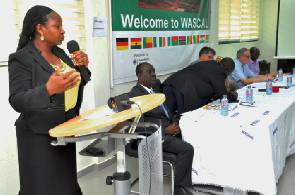
The West Africa Science Service Centre on Climate Change and Adapted Land Use (WASCAL) is to train about 3,000 research scientists by the year 2020.
This is intended to contribute to efforts by member countries of WASCAL to fight the effects of climate change on the West African sub-region and also improve the resilience of West African countries to climate change and climate variability.
The Director, Capacity Building, WASCAL, Professor Janet Olatundun Adelegan, gave the hint yesterday, when she presented a brief on WASCAL’s capacity-building programme, during the opening ceremony of a sub-regional consultative meeting on climate change in Accra.
The two-day meeting was attended by representatives from four West African countries – The Gambia, Liberia, Nigeria and Ghana.
“In West Africa we have a population of about 348 million and looking at what WASCAL has done so far, producing about 200 research scientists, our projection is to have about 3,000 climate scientists by the year 2020,” Prof. Adelegan said.
She explained that the centre was expected to organise short courses and workshops to complement the major courses which would be demand-driven and focused on the priorities of countries in the sub-region, so as to make them relevant.
Essence of meeting
The Executive Director of WASCAL, Dr Laurent G. Sedogo, said the meeting was the last of three sub-regional consultative meetings that were “aimed at identifying common research and capacity building needs of different member countries for consideration in a final regional meeting in a few months” in Ouagadougou.
He said WASCAL had commissioned national and regional consultative meetings and had so far held 14 of such , to solicit the inputs of partners and customers for their research agenda for 2017 to 2020.
“Our overarching objective is to integrate, as much as possible, the research and capacity-building needs expressed by our partners into our research agenda, so as to make our research findings and the climate services relevant to the needs of the ECOWAS region,” he stated.
Sense of ownership
The Deputy Head of Mission and Head of the Economic Section of the German Embassy, Mr Bernhard Abels, who was the special guest of honour, said the Federal Ministry of Education and Research (BMBF) and Germany wished that through the consultative workshops, member countries would develop a high sense of ownership of the WASCAL programme and agenda.
He said the BMBF also hoped that African countries would increasingly commit human and financial resources to achieve the ultimate goal of significantly reducing the effects of climate change and climate variability on human and environmental systems.
Citing some of the effects of climate change on the West African sub-region, Mr Abels said, “As the main source of livelihood for majority of the populace, rain-fed agriculture is becoming unattractive and unbeneficial for millions of smallholder farmers due to factors such as delayed start of rains, long spells during the season and declining soil fertility.”
He indicated that it was to reduce the impact of climate change that over €30 million had already been invested in infrastructure, scientific equipment, capacity building and research by German and African scientists in the last five years.
The Federal Ministry of Education and Research of Germany (BMBF) has awarded scholarships to 100 postgraduate students to pursue thematic courses in Climate Change in West Africa.
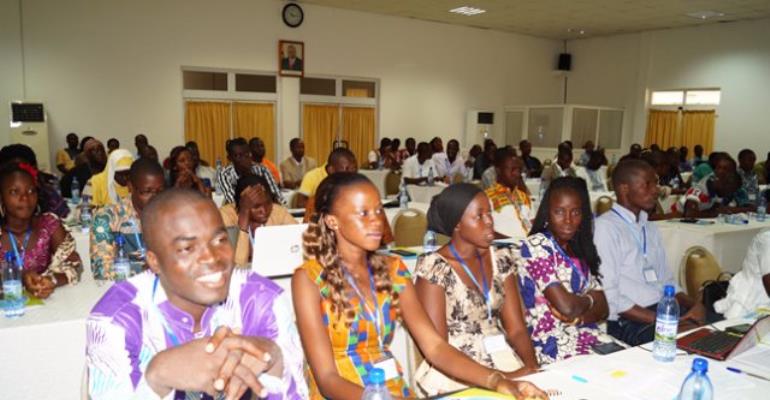
As part of efforts to strengthen West Africa’s human resource capacities to analyze regional climate change impacts, the Federal Ministry of Education and Research of Germany, (BMBF) has given scholarships to 100 postgraduate students to pursue courses in Climate Change thematic areas in West Africa.
The program is managed by the Capacity Building Department of West African Science Service Center on Climate Change and Adapted Land Use (WASCAL).
The students, who will be studying in 10 of the highest universities in West Africa, expressed delight about the opportunity given them by BMBF through WASCAL. They pledged to fully maximize for their future and that of West Africa.
The scholarship also forms part of WASCAL’s commitment to training and building the capacity of the next generation of African scientists to champion the fight against climate change, while influencing governments and policy makers.
The graduate program also aims at designing strategies to adapt to threats, opportunities and uncertainties of climate change within the region.
The 100 students, comprising 60 Doctoral Research Program and 40 Master’s Research Program Students were drawn from Ghana, Nigeria, Niger, Mali, Togo, Benin, The Gambia, Senegal, Burkina Faso and Cote d’Ivoire. They will be moving into their various universities, depending on the climate change thematic courses they have chosen to pursue.
This is the third batch of students admitted into the WASCAL program since the inception of the WASCAL Capacity Building Program in 2012. So far 255 students have benefited from the scholarship program. The postgraduate program is a partnership between 10 West African Universities and selected German Institutions.
The West African Science Service Center on Climate Change and Adapted Land Use (WASCAL) is a large scale research focused Climate Service Centre mandated to help tackle the challenges of climate change in West Africa.
It was established by its member countries- Benin, Burkina Faso, Cote d’Ivoire, The Gambia, Ghana, Nigeria, Niger, Senegal, Mali and Togo- with the support of the German Federal Ministry of Education and Research (BMBF).
With the vision of becoming one of Africa’s leading name in the provision of climate change services in and for West Africa, WASCAL is organized around three principal departments: Climate Service Department, The Research Department and the Capacity Building Department.
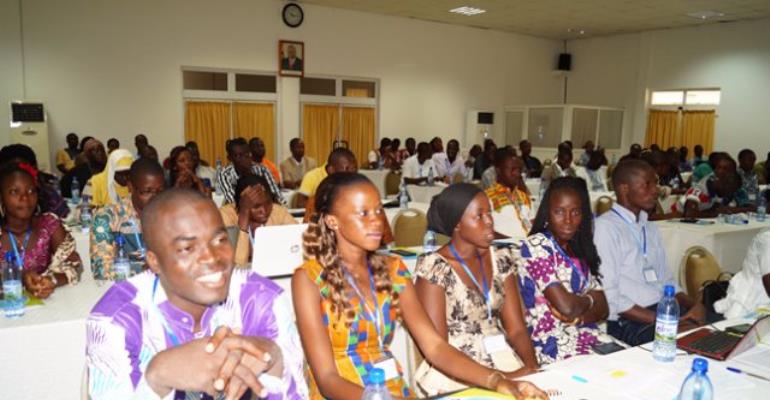
As part of efforts to strengthen West Africa’s human resource capacities to analyze regional climate change impacts, the Federal Ministry of Education and Research of Germany, (BMBF) has given scholarships to 100 postgraduate students to pursue courses in Climate Change thematic areas in West Africa.
The program is managed by the Capacity Building Department of West African Science Service Center on Climate Change and Adapted Land Use (WASCAL).
The students, who will be studying in 10 of the highest universities in West Africa, expressed delight about the opportunity given them by BMBF through WASCAL. They pledged to fully maximize for their future and that of West Africa.
The scholarship also forms part of WASCAL’s commitment to training and building the capacity of the next generation of African scientists to champion the fight against climate change, while influencing governments and policy makers.
The graduate program also aims at designing strategies to adapt to threats, opportunities and uncertainties of climate change within the region.
The 100 students, comprising 60 Doctoral Research Program and 40 Master’s Research Program Students were drawn from Ghana, Nigeria, Niger, Mali, Togo, Benin, The Gambia, Senegal, Burkina Faso and Cote d’Ivoire. They will be moving into their various universities, depending on the climate change thematic courses they have chosen to pursue.
This is the third batch of students admitted into the WASCAL program since the inception of the WASCAL Capacity Building Program in 2012. So far 255 students have benefited from the scholarship program. The postgraduate program is a partnership between 10 West African Universities and selected German Institutions.
The West African Science Service Center on Climate Change and Adapted Land Use (WASCAL) is a large scale research focused Climate Service Centre mandated to help tackle the challenges of climate change in West Africa.
It was established by its member countries- Benin, Burkina Faso, Cote d’Ivoire, The Gambia, Ghana, Nigeria, Niger, Senegal, Mali and Togo- with the support of the German Federal Ministry of Education and Research (BMBF).
With the vision of becoming one of Africa’s leading name in the provision of climate change services in and for West Africa, WASCAL is organized around three principal departments: Climate Service Department, The Research Department and the Capacity Building Department.
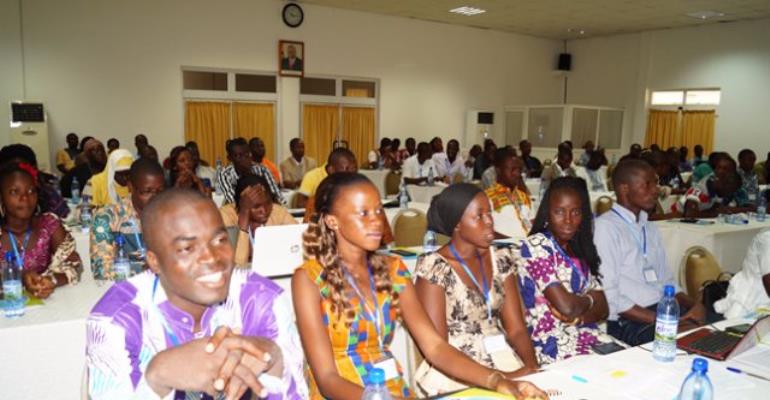
As part of efforts to strengthen West Africa’s human resource capacities to analyze regional climate change impacts, the Federal Ministry of Education and Research of Germany, (BMBF) has given scholarships to 100 postgraduate students to pursue courses in Climate Change thematic areas in West Africa.
The program is managed by the Capacity Building Department of West African Science Service Center on Climate Change and Adapted Land Use (WASCAL).
The students, who will be studying in 10 of the highest universities in West Africa, expressed delight about the opportunity given them by BMBF through WASCAL. They pledged to fully maximize for their future and that of West Africa.
The scholarship also forms part of WASCAL’s commitment to training and building the capacity of the next generation of African scientists to champion the fight against climate change, while influencing governments and policy makers.
The graduate program also aims at designing strategies to adapt to threats, opportunities and uncertainties of climate change within the region.
The 100 students, comprising 60 Doctoral Research Program and 40 Master’s Research Program Students were drawn from Ghana, Nigeria, Niger, Mali, Togo, Benin, The Gambia, Senegal, Burkina Faso and Cote d’Ivoire. They will be moving into their various universities, depending on the climate change thematic courses they have chosen to pursue.
This is the third batch of students admitted into the WASCAL program since the inception of the WASCAL Capacity Building Program in 2012. So far 255 students have benefited from the scholarship program. The postgraduate program is a partnership between 10 West African Universities and selected German Institutions.
The West African Science Service Center on Climate Change and Adapted Land Use (WASCAL) is a large scale research focused Climate Service Centre mandated to help tackle the challenges of climate change in West Africa.
It was established by its member countries- Benin, Burkina Faso, Cote d’Ivoire, The Gambia, Ghana, Nigeria, Niger, Senegal, Mali and Togo- with the support of the German Federal Ministry of Education and Research (BMBF).
With the vision of becoming one of Africa’s leading name in the provision of climate change services in and for West Africa, WASCAL is organized around three principal departments: Climate Service Department, The Research Department and the Capacity Building Department.