
Close

FUTA PRODUCES FIRST SET OF WASCAL DOCTORAL GRADUATES

The Federal University of Technology, Akure has produced its first set of Doctoral graduates under the West African Science Service Centre on Climate Change and Adapted Land Use (WASCAL) Graduate Research Program in West African Climate System (GRP-WACS). Speaking at the passing out ceremony of ten Doctor of Philosophy (PhD) graduands Monday, March 23rd 2015, the Vice-Chancellor, Professor Adebiyi Daramola expressed excitement at the initiative’s commitment to the advancement of Climate Science in West Africa and the development of the manpower needed to address climate change that particularly threatens the sub-region. He expressed appreciation to the German government for establishing the GRP-WACS Centre in Nigeria which is one of the six in operation across West African Universities.
Daramola highlighted with satisfaction FUTA’s trailblazing role in the production of PhD graduands. He said FUTA enjoyed the unique privilege of being the only University in West Africa offering full degree programmes in Meteorology, both at undergraduate and postgraduate levels from 1984 until recently when it was joined by Kwame Nkrumah University of Science and Technology (KNUST), Kumasi, Ghana and Universite Cheikh Anta Diop, Dakar, Senegal.
The Vice-Chancellor noted that the passing out ceremony reminds the system that it owes the future of the environment to the men and women who are well-trained and equipped to ask questions and provide answers to the many Climate Change challenges for decades to come, pointing out that FUTA already serves as the University component of the World Meteorological Organization (WMO) Regional Meteorological Training Centre (RMTC) of the Nigerian Meteorological Agency. He said “today we send the first ten PhD candidates produced by the WASCAL programme into the world to be teachers, climate scientists, planners and possibly revolutionaries ready to tackle issues of deficient rainfall, floods, drought, food security, environmental management, climate modeling and prediction as well as climate change adaptation and mitigation. We must continue to provide necessary funds to attract and support many more of such talented students in order to ensure the fullest development of their capacities in a rapidly changing world”.

He congratulated the graduands on what he termed laudable achievement in preparation for their contribution to solving the myriads of environmental challenges facing the region and commended their hard work, patience, endurance and dedication which he attributed to their success. He wished them the best in future endeavours and charged them to be ambassadors of WASCAL and FUTA.

Earlier, the Honourable Minister of Environment, Mrs. Laurentia Laraba Mallam who was represented by a Director in the Ministry, Mr. Paul Tafa congratulated the University Management on the timely completion of the first circle of the programme which she attributed to the dedication and commitment to duty of the WASCAL Centre alongside the cooperation and encouragement from the University authority and the community as a whole.

The Minister who traced the establishment of the WASCAL GRP-WACS Centre, in West Africa (FUTA) from 2009 explained that the lack of adequate, reliable and verifiable scientific research findings, data and information on Climate Change in Africa and indeed in Nigeria had continued to be a major challenge against effective policies and actions to combat climate change, hence the Centre which is aimed at engaging in research with Africa to develop excellence as well as build Institutions and capacities. She said “it is for this reason and considering Nigeria’s existing facilities, vast manpower and resources that will put the Centre in good stead to effectively deliver on its goals that the Nigerian government vigorously pursued the opportunity provided by the German government’s initiative which led to the establishment of the Centre in FUTA”.

The Minister who expressed gratitude to the German government for the laudable initiative highlighted socio-economic implications, added benefit to the nation’s research potential, proximal benefit to research Institutions and the opportunity for the nation to drive the process as benefits to Nigeria for hosting one as WASCAL’s Centres, adding that the graduation is the beginning of such benefits.

She noted that the best gift any country could give another was the tool to enhance its ability to tackle challenges and chart a well-defined course for its people to attain their full potential and share knowledge through quality research and education. She explained that the Federal Ministry of Environment built on the WASCAL initiative to further enhance the Centre’s data management by installing a state-of-the-art High Performance Computing (HPC) System at FUTA WASCAL Centre and also undertook a training on “Establishing and Use of the E-infrastructure for Climate Change Data and Information Management System in Nigeria” between 5th August and 30th September, 2014 towards better policy formulation and implementation.

She therefore urged the University Management and the Centre to explore options of availing wider spectrum of stakeholders the services of the centre and the climate information for use in research and other socio-economic sectors of the nation. She assured the Centre and the University as a whole of government’s support in sustaining the beneficial initiative in fulfilling its obligations under the WASCAL cooperative agreement and to also support and partner the Centre to initiate, plan and finance training activities that will showcase the importance and practical use of climate information. She congratulated the graduands and called on them to use the knowledge acquired effectively in their respective countries and beyond.

Dr. Laurent Sedogo, the Executive Director, WASCAL who was represented by the Director, Department of Graduate Studies, Dr. Mamadou Ouattara said the graduation was a landmark for both WASCAL and FUTA. He praised the exemplary collaboration received from the Vice-Chancellor and Management teams of FUTA WASCAL had worked with. He said “the commitment and efficient conduct of the Programme’s activities by your team and the support provided by your colleagues in other Universities of Nigeria, of West African Countries, Germany, South Africa, United States of America and so on have allowed reaching the results we are celebrating today”.

The Executive Director explained that WASCAL is an ambitious initiative owned by ten African Countries of the ECOWAS region, Nigeria, Benin, Burkina Faso, Cote d’Ivoire, The Gambia, Ghana, Mali, Niger, Senegal and Togo, strongly supported by the Federal Government of Germany to carry out research intended to provide science-based advice to policymakers and stakeholders on Climate Change impacts, mitigation and adaptation measures. Expressing joy over the success of the graduands, he told them to be aware that they are the first tangible and probably the most important products of WASCAL. He urged them to always represent a unique and important investment that the West African region can count on; reminding them of the uniqueness of the training they had received.

He promised WASCAL and FUTA’s continued support for the graduands in order to successfully play their roles in the society, asking them to keep in mind the necessity to cherish and maintain the relations established during their studies at the Centre.

The Chairman, WASCAL International Board, Professor Haidara who couldn’t hide his excitement on the production of PhD graduands under the initiative in the region expressed gratitude over the excellent collaboration between WASCAL and FUTA and hoped that the partnership would continue.

Addressing the gathering, the Director, WASCAL, FUTA, Professor Jerome Omotosho described the occasion as unique. He reiterated that it was the first of its kind in FUTA, Nigeria and West African as a region. He noted with pride that FUTA was the first University in the region to receive the privilege to host WASCAL PhD programme in Climate System. He thanked the immediate past Professor Adebisi Balogun led-administration for keying into the initiative that has become a reference point for FUTA. He expressed gratitude to God and the German government for the success of the programme in FUTA thus far and commended the Vice-Chancellor for the special attention and encouragement the Centre had enjoyed from him and his administration.

Delivering his goodwill message, the Director General, Nigerian Meteorological Agency, Dr. Anthony Anuforom described the event as another major achievement in the training of Meteorologists in the sub-region. He said FUTA set the pace in the establishment of a department of Meteorology and today West Africa is getting to its climax on its account. He noted that almost all meteorologists in the region are products of FUTA and are excelling in their chosen field. He thanked the University Management for providing a conducive learning environment and pledged his continued support for FUTA while congratulating the graduands. The Director General was represented by Mr. Ifeanyi Nnodu, Director, Nigerian Meteorological Agency,

Charging the graduands to be conscious of their training as solution providers on climate change which he tagged a global phenomenon, the immediate past Vice-Chancellor, FUTA, Professor Adebisi Balogun urged them to see themselves as global graduates and not restrain themselves to the region. He enjoined them to make the best of the opportunity given to change the region with the acquired knowledge and congratulated them for coming, seeing and conquering.

The representative of the Vice-Chancellor, Federal University of Technology, Minna, Dr. Appollonia Okhimamhe also noted that FUTA had proven that Nigeria has what it takes to move the region forward.

The graduands who are citizens of West African countries are:
S/N NAME GENDER COUNTRY
1. AKINSEYE, Folorunsho Mathew M Nigeria
2. ANNOR, Thompson M Ghana
3. AWOTUSE, Ayoola Olamitomi F Nigeria
4. BAMBA, Adama M Cote d’ivoire
5. DIASSO, Ulrich Jacques M Burkina Faso
6. QUANSAH, Emmanuel M Ghana
7. MOUNKAILA SALEY, Moussa M Niger
8. NIANG, Coumba F Senegal
9. SANOGO, Souleymane M Mali
10. TOURE, N’Datchoh Evelyne F Cote d’ivoire

Nouvelle expertise sur le Changement climatique en Afrique, l’apport du CCAFS

Le CCAFS Afrique de l’Ouest participe activement à la création de nouvelles compétences et expertises en Changement climatique en contribuant à la formation des étudiants ouest-africains en master et PhD

Le changement climatique constitue aujourd’hui l’une des plus graves menaces de notre époque. Ce phénomène est à la base de l’augmentation de la fréquence et de l’intensité des inondations, des sécheresses et des cyclones.

En Afrique de l’Ouest, on assiste à une baisse significative des récoltes, des pénuries d’eau, des crises sanitaires accrues avec pour conséquence une insécurité alimentaire croissante.

Afin de développer des technologies, pratiques, approches, outils d’adaptation pour atténuer ces changements climatiques, il faut se baser sur des connaissances et informations scientifiques qui malheureusement font souvent défaut en Afrique de l’Ouest. Il faut donc des compétences en qualité et en quantité dans le domaine pour générer, partager, former et permettre leur utilisation de manière efficiente. Pour ce faire, il est plus que nécessaire de renforcer les capacités existantes mais aussi et surtout de développer de nouvelles compétences et expertises sur la science du climat en lien avec tous les secteurs, notamment ceux de l’agriculture et de la sécurité alimentaire.
Créer une nouvelle expertise en Changement climatique en Afrique de l’Ouest

Une autre façon de contribuer à la lutte contre le Changement climatique est de former une expertise capable de prendre les choses en main et de proposer de nouvelles alternatives. Convaincu de cela, le CCAFS Afrique de l’Ouest apporte régulièrement sa contribution à la formation des étudiants de divers programmes universitaires.

C’est ainsi que le chef de programme du CCAFS Afrique de l’Ouest, le Dr Robert Zougmoré a donné un cours de 30 heures sur « Agriculture intelligente face au climat : une approche pour renforcer la capacité d’adaptation des systèmes de production agricole » à 23 étudiants de divers pays africains inscrits en Mastère Changement Climatique et Développement Durable du Centre régional AGRHYMET.

Il a également donné une conférence sur « L’agriculture intelligente face au climat: Actions pour réduire la vulnérabilité de l’agriculture au changement climatique ». Au sommaire de la conférence ; les défis majeurs pour l’Afrique de l’Ouest, les scenarios futurs, les éventuelles solutions pour les petits producteurs ouest-africains et des cas de succès d’Agriculture intelligente face au climat.

Cette conférence a été organisée par le Centre Régional AGRHYMET en collaboration avec le Programme Alliance Mondiale contre le Changement Climatique (AMCC).

En plus du personnel et des étudiants du Centre Régional AGRHYMET, cette conférence a connu la participation d’une cinquantaine de personnes, dont des invités de l’Ambassade de France, de l’ICRISAT, de l’Université Abdou Moumouni et de l’ONG Karkara, etc.

Puis ce fut le tour des étudiants en master changement climatique et énergie du programme WASCAL hébergé par la Faculté des sciences et techniques de l’Université Abdou Moumouni de Niamey. Là ce fut 10 étudiants venant de dix pays de la CEDEAO qui ont pendant une semaine, reçu le cours en anglais sur le changement climatique et l’agriculture (Climate-Smart Agriculture: an approach to strengthen the adaptive capacity of agricultural production systems).
Ce n’était pas un événement isolé puisque c’est la deuxième fois que le chef de programme du CCAFS Afrique de l’Ouest contribue à la formation des étudiants du programme WASCAL (West African Science Service Center on Climate Change and Adapted Land Use). Il a donné en effet un cours en 2013 sur le changement climatique et l’agriculture et un autre sur les flux d’énergie dans les systèmes de production agricole (Energetics of Production Systems (Energy Flows) visant à renforcer l’expertise de 10 étudiants en PhD du programme WASCAL coordonné par l’IPR/IFRA (Mali) et l’Université Cape Coast (Ghana)

En fait le CCAFS Afrique de l’Ouest et WASCAL développent un partenariat fructueux à travers lequel les deux programmes collaborent pour mener des recherches sur le climat, le renforcement des capacités et le partage des données et des informations scientifiques sur la question du changement climatique dans l’agriculture.

Par conséquent, les deux programmes ont décidé d’utiliser les sites de recherche du CCAFS pour mener des recherches et des études par les étudiants WASCAL, de renforcer l’expertise existante du CCAFS pour élaborer des programmes de l’université pour les divers programmes de maîtrise et de thèses.

Certains des étudiants mènent leur travail de terrain sur les sites du CCAFS comme c’est le cas de Siaka Dembélé, un étudiant doctorant de WASCAL dont le thème porte sur “Le développement de technologies de production pour des conditions de sécheresse : le cas du sorgho” à Cinzana, le site CCAFS au Mali.

Autant de plateformes pour former les étudiants et en faire des spécialistes avertis.

Il faut également tenir compte des aspects sur l’importance du développement de capacités et d’expertise en changement climatique pour bien de domaines dans les pays : mainstreaming du changement climatique dans les stratégies et plans de développement agricoles, développement d’outils et de technologies d’adaptation efficaces aussi bien pour le court, moyen et long termes, génération de connaissances et informations scientifiques devant soutenir des prises de décision bien informées, réalisation de simulations et de scénarios pouvant aider dans la prévention et la gestion des risques et des catastrophes liées à la variabilité et au changement climatique, etc.

Robert Zougmoré est le chef du programme CCAFS pour l’Afrique de l’Ouest

Sékou Touré est Chargé de communication pour le programme CCAFS Afrique de l’Ouest

ReHCONS Workshop: Connecting West Africa’s Meteorological and Hydrological Services in a Regional Observation Network

From 22-24 January, 2015, the WASCAL Competence Center in Ouagadougou held a workshop to discuss the set-up of a Regional Hydro-Climate Observation Network (ReHCONS) in West Africa for long-term climate data collection and analysis. Aside from representatives of WASCAL, the workshop was attended by the directors and representatives of the National Meteorological and Hydrological Services (NMHS), as well as those of universities and research institutions from the WASCAL member countries of Benin, Burkina Faso, Côte d’Ivoire, Gambia, Ghana, Mali, Niger, Nigeria, Senegal, and Togo. WASCAL seeks to improve the quality of the information provided by the National Meteorological and Hydrological Services of the member countries by connecting regional partners in a hydro-meteorological data collection and infrastructure network process.

Approximately 80 experts from National Meteorological and Hydrological Services, research institutions and universities of the WASCAL mandate region participated in the workshop. The workshop was opened by Dr. Laurent Sédogo, Executive Director of WASCAL, Dr. Dr. Dietrich Pohl, Ambassador of the German Embassy in Ouagadougou, and Prof. Filiga Michel Sawadogo, Minister of Secondary, Higher Education and Scientific Research.

Currently, the National Meteorological and Hydrological Services (NHHS) face many challenges to maintain their data collection stations and to provide conclusive meteorological and hydrological data. The network density of the National Meteorological and Hydrological Services is low in many West African countries and below standards recommended by the World Meteorological Organization (WMO). Frequent failures in equipment lead to gaps in the data records. The NMHS stated problems concerning data archiving, quality control and analysis including deficiencies in staff number (mostly affected by personnel retirement) and capacity building.

Dr. Laurent Sédogo, Executive Director of WASCAL, stressed the importance of working together in the effort to combat climate change: “It is only together that we can handle the issue of climate change. Not every single country has the scientific capacity, the human capacity, and the technical capacity to tackle climate change. For the northern countries climate change may be a scenario of the future, but we in West Africa, we already live the reality of climate change.” “WASCAL aims to assess, connect and enhance the existing national observation networks”, explains Dr. Boubacar Barry, director of the WASCAL Competence Center. “Such cooperation would benefit all participants.” WASCAL will provide the networks with a number of stations to fill the gaps in the network. Training of staff members will further contribute to a successful running of the stations. WASCAL’s data infrastructure will serve as a shared dissemination platform. Based on the data provided by the national services, WASCAL in return will be able to improve models, climate change scenarios and offer climate services to stakeholders in the West African region.

The workshop followed two regional workshops organized by WASCAL in August 2010 during which the directors and representatives of the National Meteorological and Hydrological Services presented the history and the current situation of their respective organisations, on tasks, weaknesses and strengths as well as their expectations of how WASCAL can support and strengthen the West African observation networks on climate and water resources. “Following up with the results from the workshops in 2010, we established a timeline and agreed on a communique to outline the further steps towards the establishment of the Regional Hydro-Climate Observation Network. Another important result was the drafting of a joint Data Sharing Policy, which regulates the rights and regulations concerning data exchange” summarised Dr. Mouhamadou Bamba Sylla, Coordinator of the WASCAL Observation Networks.

Projektseite WASCAL

Studieren in Togo – Eine Erfahrung fürs Leben

Commitment to the implementation of natural resources management policies in Africa will help in enhancing the contribution of natural resources to the continent’s
development.

This was one of the key messages in the closing remarks of the Director of the United Nations University Institute for Natural Resources in Africa (UNU-INRA), Dr. Elias T.Ayuk, at a book launch event organised by the Institute in Accra.

Dr. Ayuk observed that there is a continuum of six I’s (ideas, innovation, incentives, institutions,infrastructure and implementation), which need to be addressed to promote development in Africa.

Citing the agricultural sector as an example, he emphasised the need for innovative ideas and technologies in processing food crops for domestic consumption and exports. He, however, acknowledged that incentives would boost innovations, and appealed to African governments and other stakeholders to help promote productivity of the agricultural sector with adequate financial support that target small and medium-size enterprises.

Dr. Ayuk stressed the need for strong institutions and massive infrastructure development to promote the growth of many African countries.

“Africa really needs strong leadership and infrastructural improvement at all levels to accelerate growth. We need to enhance capacity at our institutions to improve efficiency and expand our market infrastructure to promote export,” Dr. Ayuk reiterated.

The books launched by the Institute at the event are entitled “Economic and Financial Analyses of Small and Medium Food Crop Agro-Processing Firms in Ghana” and Harnessing Land and Water Resources for Improved Food Security and Ecosystem Services in Africa”.

The first book “Economic and Financial Analyses of Small and Medium Food Crop Agro-Processing Firms in Ghana” reports on a research project that analysed agro-processing firms’ economic situations in Ghana.

Findings from the study revealed that the agro-processing subsector in Ghana is characterised by high informality with lack of business planning, poor financial records keeping and financial analysis, and absence of risks and performance monitoring. High interest rate of loans is also identified as one of the factors limiting the profitability of agro-processing firms.

One of the policy options explored in the book is the development of customised innovative and inclusive financial products and services to meet the specific needs of micro, small and medium food crops processing enterprises to improve their profitability. It also proposes increased awareness on quality control and standardization as well as capacity development as potential strategies to promote the growth of the agro-processing sub-sector.

The second book “Harnessing Land and Water Resources for Improved Food Security and Ecosystem Services in Africa” is a compilation of research papers that draw attention to the impact of human activities on land and water resources. Issues such as wastewater management, water pollution,land degradation, massive land acquisition, and climate change impact on food security were discussed in the book. Among the potential policy directions, the book calls for the provision of alternative livelihoods such as the promotion of aquaculture, recycling of agro-wastes for biofuel and soil amendment measures to halt land degradation and water pollution in Africa.

Commenting on the two books at the launch, the Director of Agri-business of the Ministry of Food and Agriculture (MoFA), Ghana, Mr. Nicholas Neequaye, called for more private sector partnerships to address issues of post-harvest losses, land degradation and water pollution in Africa. He said “we must admit that addressing these challenges properly calls for private sector partnership to complement Governments’ efforts”.

The production of these knowledge products, according to the UNU-INRA Director is to provide empirical evidence for policy makers and other stakeholders on the state of natural resources in Africa. This, he indicated, is in line with the Institute’s mandate to promote thsustainable use of natural resources in Africa, for development.

About UNU-INRA
UNU-INRA’s work centres on Africa’s two most important endowments — its human and natural resources. It aims at strengthening capacities at universities and other national institutions to conduct research and produce well-trained individuals with the ability to develop, adapt and disseminate
technologies that promote the sustainable use of the continent’s natural resources. UNU-INRA operates out of its main office at the University of Ghana campus. It has also established operating units (OUs) at the University of Cocody, Abidjan, Ivory Coast, University of Yaoundé I, Yaoundé, Cameroon, University of Zambia, Lusaka, Zambia, University of Namibia, Windhoek, Namibia, and Institute for
Food Technology (ITA) of the Ministry of Mines and Industry in Dakar, Senegal.

Photo from left to right: Prof. Emmanuel Owusu-Bennoah, Professor, College of Agriculture & Consumer Sciences,University of Ghana and member of UNU-INRA Advisory Board, Dr. Laurent Sedogo, Director, WASCAL, Mr. Nicholas Neequaye, Director of Agribusiness,(MoFA) and Dr. Elias. T. Ayuk, UNU-INRA Director.

Source:UNU-INRA.

The WASCAL Master Programme on Climate Change and Human Security

LOCATION:
Togo

The WASCAL Master programme supports and facilitates academic instruction on the links between climate change and human security in West Africa. The program is hosted at the University of Lomé, in association with UNU-EHS as a counterpart institution to offer students an integrated learning environment. Students acquire the necessary skills to qualify them as disaster and risk management specialists on climatic risks based on relevant background knowledge in meteorology, geosciences, social sciences, health, economics, institutions, law and policy.

Upon completion of their study, students are expected to be able to:

Analyze, with scientific tools and methods, the threats and climatic risks societies or communities face;
Synthesize knowledge regarding integrated management strategies for climate change, specifically to improve human security;
Offer adaptation options, strategies and plans to deal with climate change at multiple scales;
Assist communities in dealing with climate change by implementing integrated adaptation and mitigation strategies.

UNU-EHS provides the scientific expertise in vulnerability and risk assessment frameworks and methodologies, along with insights into ongoing research activities and outcomes. Furthermore, UNU-EHS, together with the United Nations Office for the Coordination of Humanitarian Affairs Regional Office for West and Central Africa (UNOCHA ROWCA) and the Togolese Red Cross, train students in the use of geospatial technologies, such as Remote Sensing and GIS for applications in the area of disaster risk reduction and emergency response preparedness.

Mesurer la pluviométrie grâce à la téléphonie mobile

Lecture rapide

La technologie mise au point par une équipe internationale de chercheurs, repose sur certaines particularités connues des ondes électromagnétiques
Elle permet de mesurer la pluviométrie avec une plus grande efficacité que les outils traditionnels utilisés par la plupart des pays africains
De nombreuses applications sont envisagées, notamment dans le secteur agricole.

Par: Mathieu Bonkoungou

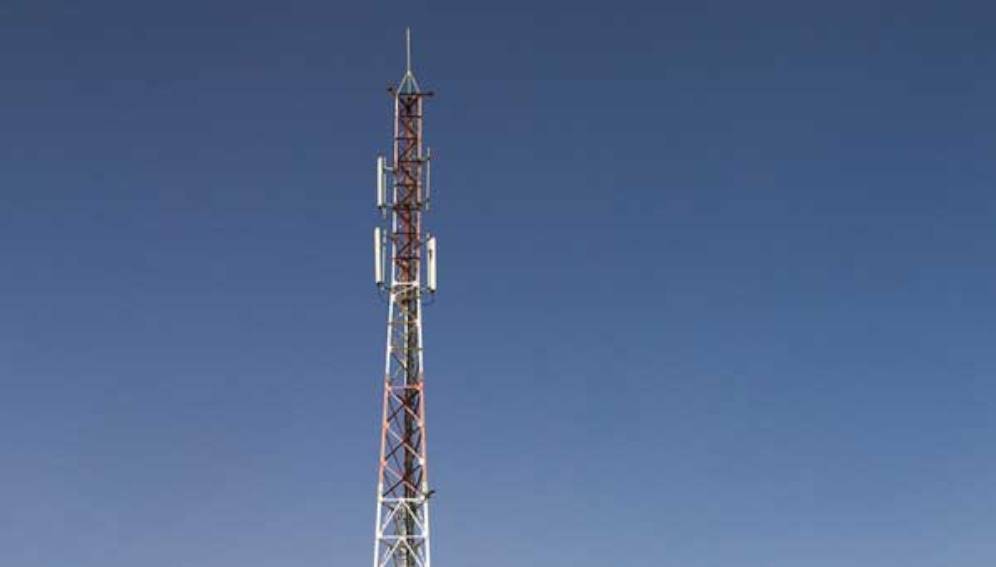
Une équipe de chercheurs du Laboratoire de Matériaux et Environnement (LAME) de l’Université de Ouagadougou, en collaboration avec des chercheurs de l’Institut français de Recherche et de Développement (IRD) vient de mettre au point une technique permettant de mesurer la pluviométrie, en se basant sur des informations recueillies par les opérateurs de téléphonie mobile, dans la transmission du signal entre deux pylônes.

Les résultats de l’étude menée au Burkina ont été publiés en juillet dernier dans la revue “Geophysical Research Letters”.

François Zougmoré, professeur titulaire de physique à l’université de Ouagadougou et directeur du LAME, les étudiants doctorants Ali Doumounia et Modeste Kacou, Frédéric Cazenave, ingénieur de recherche au Laboratoire d’études des transferts en hydrologie et environnement à Grenoble et à l’IRD et leur collaboratrice, Marielle Gosset, du Laboratoire Géosciences Environnement de Toulouse, sont partis du principe connu de l’atténuation du signal hertzien par les gouttes d’eau.

“Quand une onde dans sa propagation rencontre des gouttelettes d’eau, même la vapeur (mais l’action est plus visible avec les gouttelettes d’eau), il y a une partie qui est absorbée, c’est-à-dire prise par la matière qui est traversée, une autre partie est réfléchie, c’est-à-dire diffusée, et une troisième est transmise”, explique François Zougmoré.

“En général, la partie qui est transmise est d’un point de vue de la puissance, plus faible que la partie incidente”, poursuit le chercheur.

“Au niveau des opérateurs de télécommunication, l’action de la pluie est suivie avec attention. Entre deux pylônes, ils mesurent de façon régulière et systématique la puissance qui a été émise et la puissance qui a été reçue. Entre le moment où ils envoient et le moment où ils reçoivent, ils ont le temps de mesurer et de voir, s’il y a eu un abaissement ou une diminution importante de la puissance. Si la puissance diminuée est importante et ne permet pas une bonne réception, les opérateurs réajustent en augmentant la puissance, afin de permettre la poursuite ou la continuité de la réception par les abonnés.”

Ces mesures systématiques permettent de pouvoir remonter et de trouver la quantité d’eau qui a perturbé l’onde.

Le travail des chercheurs repose donc sur la capacité de trouver la quantité de pluie tombée, en partant de l’atténuation de l’onde.

L’un des avantages que présente cette innovation est qu’il est plus fiable que les pluviographes utilisés par les services de la météorologie, au niveau national.

“Ces fluviographes ne présentent que 400 cm2 comme surface de captation. Il faudrait donc placer une quantité énorme de pluviographes pour savoir la quantité d’eau tombée sur une grande superficie et la météorologie nationale n’en a pas les moyens”, explique encore François Zougmaré.

Les pylônes de la téléphonie mobile couvrent densément le territoire, même les zones les plus reculées du pays.

La compagnie de téléphonie mobile Telecel avec laquelle les chercheurs ont collaboré pendant la durée de l’étude dispose d’un pylône tous les 30 km.

Sur cette distance, les chercheurs ont pu savoir quelle est la quantité de pluie tombée, vu que l’onde aura parcouru cette distance et c’est sur cette distance que l’intégration est effectuée.

Les autres méthodes, le radar et le satellite, sont certes précis, mais hors de prix pour la plupart des pays africains.

Quant aux applications qui pourraient résulter de cette découverte, les chercheurs sont intarissables.

Un atout pour l’agriculture

En menant l’étude, l’objectif principal des chercheurs était de mettre à des données fiables et gratuites sur la pluviométrie à la disposition des chercheurs, pour la réalisation de modèles hydrologiques et des médecins qui travaillent sur le paludisme, afin de leur permettre de prendre en compte les problèmes de paludisme dans certaines régions affectées par les inondations.

L’étude avait également pour objet de permettre aux décideurs d’avoir des données pluviométriques fiables susceptibles de leur permettre de prendre les dispositions idoines en cas d’inondation.

Pour Modeste Kacou, étudiant en thèse de physique de l’atmosphère, “l’objectif visé est d’arriver à améliorer les connaissances sur les différents systèmes pluvieux, afin de mettre en place à court ou moyen terme, des systèmes d’alerte qui permettraient de réduire l’impact des phénomènes météorologiques sur les populations”.

Selon Ali Doumounia, la technique permet également de localiser rapidement les poches de sécheresse annonciatrices de déficits céréaliers.

“Nous sommes dans la zone sahélo-sahélienne et environ 78% de la population burkinabé ne vivent que de l’agriculture pluviale. Donc quantifier la pluie pourra permettre à ces populations d’aborder un peu plus tôt la saison des pluies, explique le chercheur, dont la thèse porte sur le sujet de la quantification de la pluie à partir des liens hertziens.

“Nous connaissons l’importance de l’eau pour un pays agricole comme le Burkina Faso. Il est bon de savoir la quantité d’eau tombée pour le remplissage des barrages hydro-électriques et pour faire des prévisions. Et même pour le changement climatique. Pour pouvoir faire des projections, il faut avoir des informations fiables et donc actuelles. Si nous arrivons donc à donner des informations fiables sur les quantités de pluies, nous pourrons sur cette base avoir de meilleures projections par rapport au modèle climatique.”

Les chercheurs estiment que technologie mise au point pourrait également être intégrée dans les services météorologiques d’autres pays africains.

“Il n’y en a pas beaucoup qui ont des radars, alors qu’ils sont couverts par la téléphonie mobile. Par exemple la compagnie Airtel couvre à elle seule 85% du territoire africain. Donc si Airtel livre déjà les données qu’elle a en sa possession, cela pourrait être suffisant pour donner des informations sur cette étendue. Nous ne comptons pas garder cette innovation pour nous”, explique le chercheur.

Les initiateurs envisagent du reste de former des membres des services météorologiques du Mali, du Niger et du Togo, entre autres, pour qu’ils apprennent à utiliser le dispositif afin de réaliser des cartes des précipitations et aident à la prévision et à la prévention des risques d’inondation de famine”.

Opérationnaliser au plus vite

Mais pour que cette innovation donne la pleine mesure de ses capacités, il faut l’opérationnaliser.

Selon François Zougmoré, si cette technique venait à être opérationnalisée, “un paysan sur son téléphone portable, pourrait interroger une base de données et savoir quelle est la quantité de pluie qui vient de tomber.”

“Nous ne faisons pas de prévision, mais nous donnons la quantité de pluie mesurée. Les paysans attendent parfois la pluie pour semer. L’information sur les quantités de pluie pourra leur permettre de prendre la bonne décision et de gérer leur saison, mais c’est l’opérationnalisation qui permettra cela. Si on a les informations, on les traitera au jour le jour et cela sera possible en temps réel.”

Selon le chercheur, l’aspect scientifique est réglé, il reste à passer à l’opérationnalisation et cette phase pourrait être sponsorisée par un opérateur ou des autorités politiques.

Ali Doumounia insiste pour sa part sur les avantages de la technique: “Elle est très avantageuse. Elle ne nécessite pas de coût pour les opérateurs de téléphonie mobile ni pour les laboratoires. Nous avons juste besoin des moyens techniques et de personnes bien décidées pour la mettre en œuvre.

Les chercheurs lancent donc un appel aux compagnies de téléphonie mobile opérant sur le continent afin qu’elles coopèrent et mettent les données sur l’affaiblissement de leurs signaux à leur disposition.
L’opération, insistent-ils, n’a aucune incidence sur le réseau et ne provoque aucune perturbation.

Pour la mise en œuvre de cette technologie, un consortium a été mis en place comprenant l’université de Ouagadougou, le West African Science Service Center on Climate Change and Adapted Land Use (WASCAL), l’IRD, le Karlsruhe Institute of Technology et Garmisch-Partenkirchen en Allemagne.
Ces différentes entités font partie de Rain Cell Burkina, précurseur de Rain Cell Africa.

En novembre prochain, un premier atelier sera organisé à Ouagadougou sur la quantification de la pluie a partir des liens hertziens commerciaux.
Plus

Jobber, une application mobile pour la recherche d’emplois
Lancement au Sénégal du challenge Data for Development
La Tanzanie teste une application mobile pour analyser …
Les données sur les réseaux mobiles, un trésor caché …
Un numéro mobile spécial pour le personnel médical en …

Programme de Master WASCAL en changements climatiques et énergie

L’Université Abdou Moumouni de Niamey lance un programme de Master de deux ans sur les changements climatiques et énergie (MRP-CCE) à compter de l’année scolaire 2014-2015. Le programme offre une bourse complète aux candidats retenus. Les candidats potentiels sont invités à soumettre une demande pour la sélection.
Ce Programme de Master Recherche est ouvert aux meilleurs étudiants et ingénieurs avec une licence dans les disciplines scientifiques ou d’ingénierie avec au moins la Mention Assez-bien. Les candidats qui ont de fortes adptitudes en physique, chimie, génie civil, génie de l’environnement, génie électrique ou génie mécanique sont préférés.

Conditions d’admissibilité au programme:
• Etre un citoyen d’un des pays membres de WASCAL: Bénin, Burkina Faso, Côte d’Ivoire, Gambie, Ghana, Mali, Niger, Nigeria et Togo
• Envoyer une lettre de motivation
• Fournir des relevés de notes et des copies de diplômes
• Fournir des lettres de recommandation de trois références
• Fournir un curriculum vitae
• Les candidats francophones doivent avoir un niveau intermediaire en anglais
Date limite: 15 Aout 2014

Cote d’Ivoire: Changement climatique – Les membres du programme Wascal consolident leurs acquis

Par Hervé Adou

Selon Laurent Sedogo, directeur exécutif du programme, les premiers diplômés des différentes écoles, situées à Bingerville, « seront opérationnels début 2015 ».

Il s’agit de 158 étudiants issus de six écoles doctorales et quatre autres de niveau master, après trois ans de formation. Changement climatique: Les membres du programme Wascal consolident leurs acquis

Cote d’Ivoire: Changement climatique – Les membres du programme Wascal consolident leurs acquis

Par Hervé Adou

Selon Laurent Sedogo, directeur exécutif du programme, les premiers diplômés des différentes écoles, situées à Bingerville, « seront opérationnels début 2015 ».

Il s’agit de 158 étudiants issus de six écoles doctorales et quatre autres de niveau master, après trois ans de formation. Changement climatique: Les membres du programme Wascal consolident leurs acquis

Deutsch-westafrikanisches Forschungsprojekt WASCAL ist eine internationale Organisation – Koordination der Deutschen Partner liegt beim Zentrum für Entwicklungsforschung

WASCAL – das West African Science Service Center on Climate Change and Adapted Land Use ist ein gemeinsames Projekt von 10 westafrikanischen Staaten und deutschen Forschungseinrichtungen. Finanziert durch das Bundesministerium für Bildung und Forschung (BMBF), wird das Projekt am Zentrum für Entwicklungsforschung (ZEF) der Universität Bonn ausgeführt, mit dem Ziel eine dauerhafte Forschungseinrichtung in Westafrika zu schaffen, die als regionales Klimaservicezentrum fungiert. Mit der Bestätigung durch sechs der zehn beteiligten westafrikanischen Partnerländer und der Westafrikanischen Wirtschaftsgemeinschaft ECOWAS, ist WASCAL nun offiziell als regionale internationale Organisation gegründet worden.
Nachhaltige Strukturen schaffen – Klimakompetenz in Westafrika langfristig steigern

Basierend auf klimarelevanten Forschungsergebnissen sollen die westafrikanischen Länder in die Lage versetzt werden, Entscheidungen für eine nachhaltige Land- und Wassernutzung treffen zu können. „Forschungsprojekte sind in der Regel auf einen befristeten Zeitraum angelegt. Das bedeutet aber, dass mit dem Ende des Projektes auch die Wissenschaftler, und damit die Ergebnisse und die Infrastruktur, das Forschungsgebiet wieder verlassen. Mit der Etablierung von WASCAL als regionale internationale Organisation soll sichergestellt werden, dass sowohl Forschungsergebnisse als auch Forschungsinfrastrukturen langfristig in Westafrika zugänglich und nutzbar sind“, erklärt Professor Dr. Paul Vlek, Direktor von WASCAL und des Zentrums für Entwicklungsforschung in Bonn. Dies bedeutet aber auch, dass sich die Partnerländer ab 2013 mit steigenden Anteilen an der Finanzierung von WASCAL beteiligten werden. „In Zukunft wird WASCAL als Klimazentrum eine gemeinsame Ressource für die westafrikanischen Staaten sein, finanziert durch die beteiligten Länder und internationale Geldgeber“, erläutert Vlek weiter.

Daten, Experten und technische Infrastruktur für Westafrika

Der Klimawandel stellt für Westafrika eine Herausforderung dar. Obwohl Afrika der Kontinent mit den geringsten Schadstoffemissionen ist, wird er voraussichtlich von den Folgen des Klimawandels besonders stark betroffen sein. Bislang fehlen in Westafrika nicht nur umfassende Daten zum Klimawandel, sondern auch die technische Infrastruktur und Experten, um die Daten auszuwerten und Schlüsse daraus zu ziehen. Daher setzt WASCAL auf drei Komponenten: In zehn Graduiertenschulen an Universitäten der Partnerländer werden Masterstudenten und Doktoranden ausgebildet. In einem interdisziplinären Forschungsprogramm untersuchen deutsche und westafrikanische Forscher Fragen zur Land- und Wassernutzung in Verbindung mit Ökosystemleistungen und der Ernährungssicherung in Westafrika. Ein Kompetenzzentrum in Ouagadougou, Burkina Faso, bündelt die Forschungsarbeiten und berät Politiker, Vertreter aus der Wirtschaft und die Bevölkerung.

Benin, Burkina Faso, Gambia, Ghana, Niger und Togo haben WASCAL bestätigt

Die Initiative zur Gründung von WASCAL ging vom Bundesministerium für Bildung und Forschung (BMBF) gemeinsam mit den Ministerien und Regierungen der zehn beteiligten westafrikanischen Staaten aus. Neben den Staaten Benin, Burkina Faso, Gambia, Ghana, Niger und Togo, die ihre offizielle Anerkennung bereits mitgeteilt haben, sind Elfenbeinküste, Mali, Nigeria und Senegal an WASCAL beteiligt. 2010 begann die gemeinsame Planungsphase, 2012 die Umsetzungsphase. WASCAL wird vom BMBF bis 2016 mit insgesamt 50 Millionen Euro gefördert. Neben den westafrikanischen Partnern sind Forschungseinrichtungen aus ganz Deutschland beteiligt. Die Koordination der Deutschen Partner liegt beim Zentrum für Entwicklungsforschung (ZEF) der Universität Bonn.
Kontakt:
Jelana Vajen
Zentrum für Entwicklungsforschung (ZEF) der Universität Bonn
Presse- und Öffentlichkeitsarbeit WASCAL
Tel.: 0228-73-4949
press@wascal.org

Weitere Informationen unter: www.wascal.org